Running an Amazon FBA business involves more than finding products and sending them to Amazon's warehouses. Sellers also need to manage inventory, coordinate with suppliers, research products, monitor competitors, and track sales performance.
As a store grows, handling these responsibilities manually becomes increasingly difficult. A delayed shipment or an unexpected stock shortage can affect sales and tie up valuable money.
This is why Amazon FBA automation is becoming an important part of e-commerce business management. By using the right tools and services, sellers can reduce repetitive tasks, organize daily operations, and focus on growing their businesses.
Why Managing an Amazon FBA Business Is Becoming More Complex
Managing a store with five products is relatively simple. Handling 40 or 50 products across different suppliers requires a much more organized approach.
Sellers must monitor stock levels, review product demand, compare supplier prices, and plan replenishment. They also need to keep track of listing performance and changing competition.
For example, a product that normally generates 15 orders per day might suddenly start selling twice as fast. Without regular inventory monitoring, the seller could run out of stock before the next shipment arrives.
Spreadsheets and manual updates may work for smaller stores, but they become harder to maintain as operations expand. This is where automation can make a practical difference.
How Automation Is Improving Amazon FBA Operations
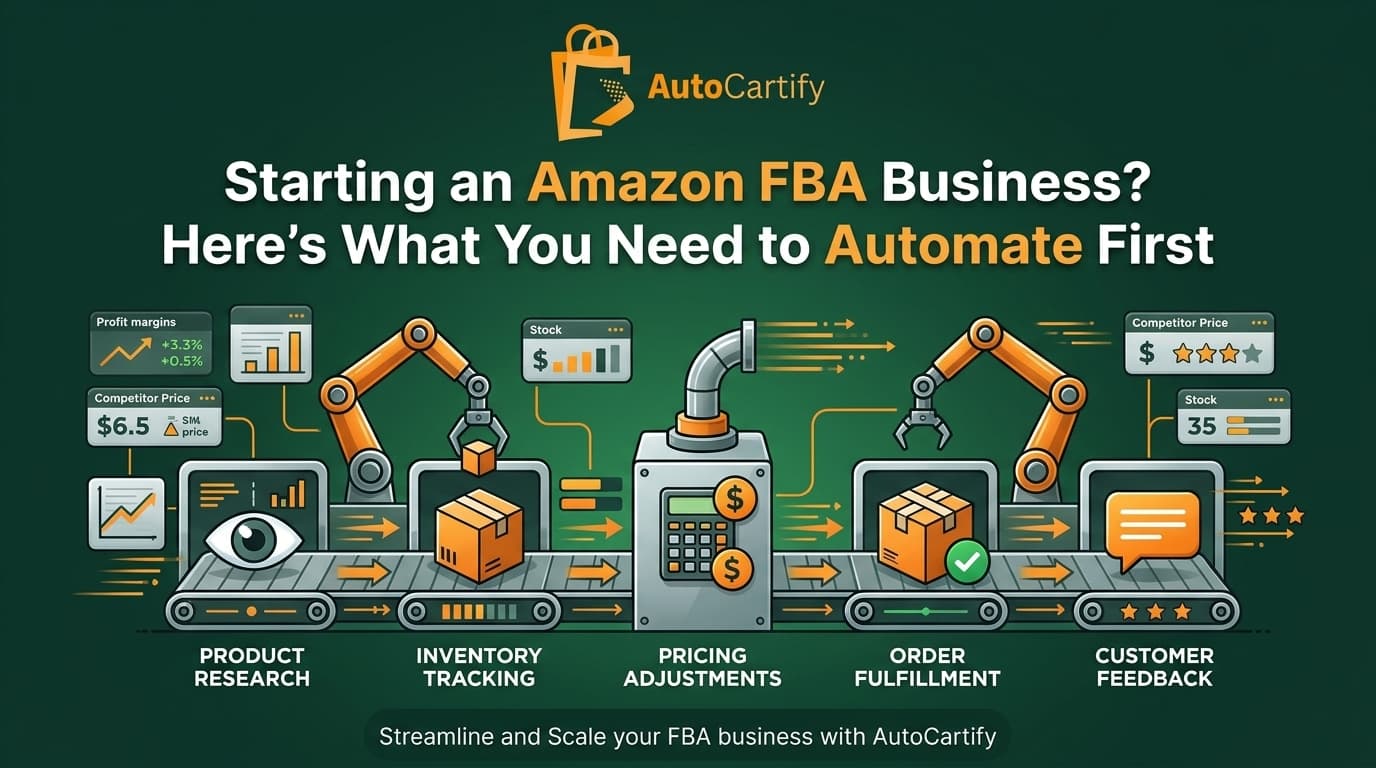
Automation helps sellers manage several business activities more efficiently. From product research to inventory tracking, it reduces the amount of manual work involved in running an Amazon store.
Simplifying Inventory Management
Keeping the right amount of stock is essential for maintaining consistent sales. Overstocking ties up capital, while stockouts can result in missed orders and lost revenue.
Amazon inventory management tools help sellers monitor stock levels, track product movement, and identify when replenishment may be necessary.
Some systems also use previous sales data to estimate future inventory requirements. For instance, if demand for a particular product increases, sellers can use these insights to review their purchasing and shipment schedules.
This makes inventory planning more organized and reduces reliance on manual stock checks.
Making Product Research More Efficient
Choosing the right products requires an understanding of market demand, competition, and potential profitability.
Product research tools help sellers analyze search trends, competitor prices, estimated sales, customer reviews, and product performance.
Instead of manually reviewing hundreds of listings, sellers can narrow down potential opportunities using relevant market data.
For example, someone considering a kitchen accessory can compare similar products, evaluate competition, and assess whether the category has enough demand to justify an investment.
Automation makes research faster, but sellers still need to consider supplier reliability, product quality, Amazon fees, and profit margins before making a decision.
Streamlining Supplier and Order Management
Although Amazon handles storage, packing, and shipping through FBA, sellers remain responsible for coordinating with suppliers and preparing inventory shipments.
Automation tools can help organize purchase records, track shipment updates, and keep order information accessible.
This is particularly useful for sellers working with multiple suppliers. Instead of checking different spreadsheets and conversations, they can use centralized systems to monitor order progress and identify potential delays.
Better organization also makes communication between sellers, suppliers, and fulfillment operations easier.
Improving Pricing and Performance Monitoring
Amazon marketplaces are competitive, and product prices can change frequently. Checking every competitor manually takes time, especially when managing several listings.
Automated repricing tools monitor competitor prices and adjust selling prices according to rules established by the seller. Minimum price limits can help protect profit margins.
Performance dashboards provide another advantage. Sellers can review sales, conversion rates, advertising results, and inventory movement in one place.
These insights help identify underperforming products and areas that may need attention.
Key Benefits of Amazon Business Automation
The main advantage of automation is not simply completing tasks faster. It helps sellers manage their operations more effectively as their businesses grow.
Some practical benefits include:
Reduced manual work: Routine activities such as inventory tracking and report generation require less attention.
Better stock control: Automated alerts help sellers identify potential shortages and plan replenishment.
Fewer operational errors: Automated tracking and calculations reduce mistakes caused by repetitive data entry.
Improved efficiency: Organized workflows make it easier to manage multiple products and suppliers.
More time for growth: Sellers can focus on product selection, marketing, and business planning instead of constant administrative work.
These improvements become increasingly valuable as order volumes and product catalogs expand.
What Sellers Should Consider Before Automating
Not every business needs the same automation tools. Investing in unnecessary software can increase operating costs without solving the actual problems.
Sellers should first identify which activities consume the most time. Some may need better inventory tracking, while others may benefit more from product research or supplier management tools.
Software costs, compatibility, ease of use, and available support should also be considered.
Most importantly, automation should not replace human oversight. Inventory recommendations, pricing adjustments, and performance reports need regular review. Market demand changes, suppliers experience delays, and unexpected expenses can affect profitability.
The best approach is to automate repetitive activities while keeping important business decisions under control.
How Automation Services Support E-Commerce Businesses
Managing every part of an online store is not practical for every seller. Some prefer to focus on business strategy while getting professional support with daily operations.
E-commerce automation services can help with product research, inventory management, supplier coordination, and store administration.
The same approach is becoming popular across other e-commerce platforms. For example, Shopify Automation helps store owners streamline activities such as order processing, inventory updates, and customer notifications. Although Shopify and Amazon FBA have different operating models, both benefit from reducing repetitive work and organizing business processes.
AutoCartify provides e-commerce automation and management services, including Amazon product research, wholesale automation, and FBA inventory management. These services support sellers who need assistance managing important operational responsibilities.
Before choosing a provider, sellers should review the services offered, understand the management process, and make sure the arrangement meets their business requirements.
Is Automation the Future of Amazon FBA Business Management?
As Amazon businesses expand, managing every activity manually becomes less practical. Sellers need efficient ways to monitor inventory, research products, coordinate suppliers, and review store performance.
Automation makes these responsibilities easier to manage, but technology alone cannot guarantee business success. Product selection, supplier relationships, financial planning, and market understanding still require careful decisions.
Combining suitable automation tools with human oversight gives sellers a more organized way to run their businesses. It also allows them to spend less time on repetitive tasks and more time identifying opportunities for growth.